
Understanding reciprocal IVF
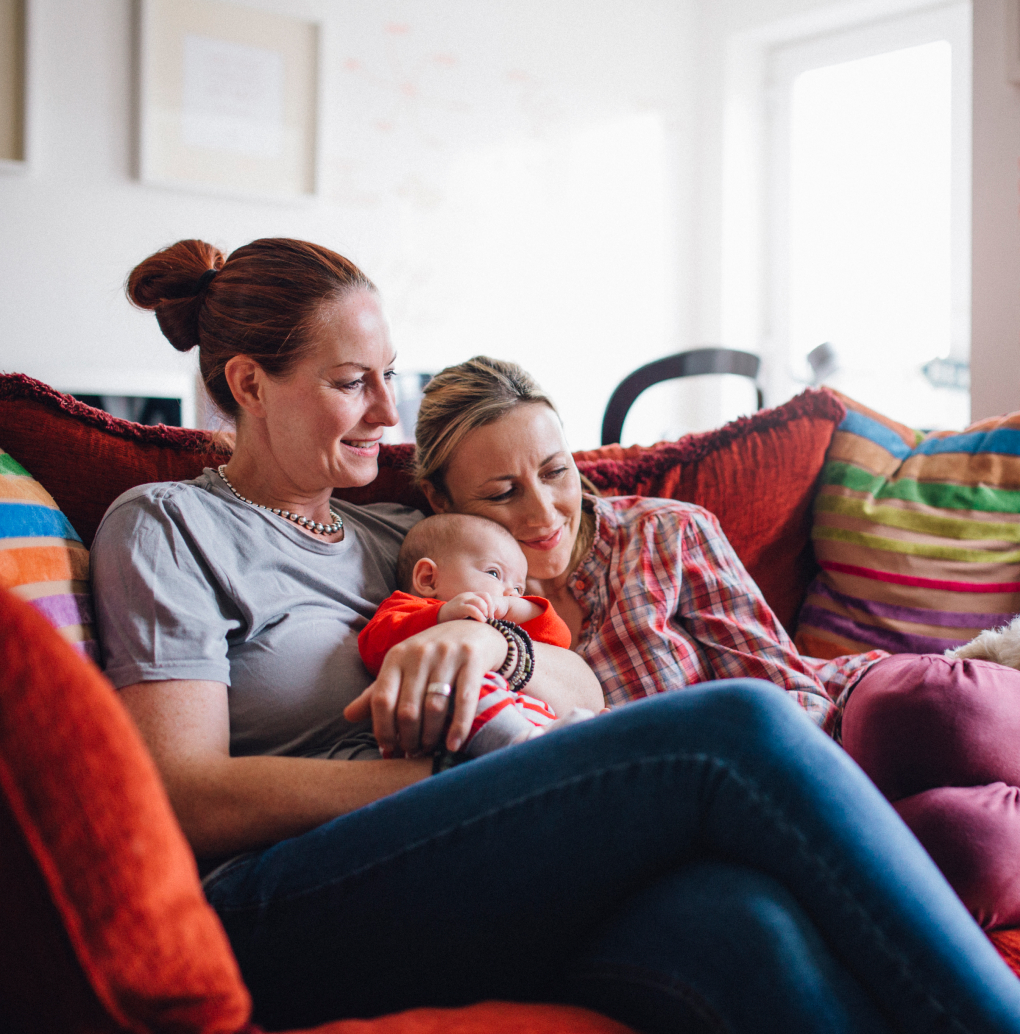
Shared motherhood is for female couples where one partner carries the pregnancy and the other donates her eggs, which are used to create an embryo with donor sperm. This treatment allows both partners of same-sex couples to be deeply and intimately involved in the creation of their family.

How does it work?
One partner (the intended genetic parent) undergoes ovarian stimulation and has an egg collection. The eggs are then fertilised using donor sperm. The intended birth mother has the embryo transferred into her uterus, and any additional embryos can remain frozen for use by either partner further down the line.
1
Your Initial Consultation
Your journey begins with a consultation with one of our doctors. They’ll walk you both through Shared Parenthood step by step, explain what to expect along the way and talk honestly about your chances of success based on your own circumstances. Together, you’ll agree the tests you each need and a plan for your treatment.

2
Meet your Fertility Care Coordinator
Soon after your consultation, your dedicated Fertility Care Coordinator (FCC) will be in touch. They’ll arrange your tests, book your initial screening bloods, guide you through your consent forms and map out your timeline. They’ll also take you through the costs of your treatment, so you know what to expect at each stage. From here on, your FCC is your go-to person for any questions you have.

3
Choosing your Donor Sperm
Our Donor Coordinator will introduce you to the sperm banks we partner with and help you through ordering and delivery. They’ll also connect you with our affiliated counsellors. Counselling is a required part of the process, and it gives you both space to explore what this journey means for your family.

4
Getting Ready to Start
Once your donor sperm has arrived and your consents are signed, you’re ready to begin. Shortly after the donating partner starts her medication, and before egg collection, she’ll have an extended screening known as “time of donation” screening. This is required under EU regulations for tissues and cells, and your FCC will arrange it for you.

5
Egg Collection and Creating your Embryos
The donating partner’s medication helps several eggs to mature, and these are then collected in a short procedure. In our lab, the eggs are fertilised with your donor sperm and carefully grown for five to six days until they reach blastocyst stage. Your embryos are then frozen and kept safely in storage until you’re ready for the next step.

6
Your Frozen Embryo Transfer
When the time is right for you, we’ll plan the carrying partner’s frozen embryo transfer. With some medication and monitoring to prepare the womb lining, the transfer itself is a gentle, quick procedure. No sedation is needed.


Pricing information
From €6,625. Shared parenthood/reciprocal IVF includes:
Co-ordination & treatment set up
Nurse Consultation
Treatment cycle scans
Hormone Monitoring
Shared Parenthood Time of Donation Bloods
EU Viral Screening
IVF
Embryo Cryopreservation
Theatre Fees
Blastocyst Culture
Not included:
Subsequent Frozen Embryo Transfer cycle for partner, €1,750

Viral screening
Is a crucial step to ensure the safety of both the patients and any resulting embryos or gametes (eggs or sperm).
Viral screens are a set of blood tests performed in order to rule out certain viruses, such as HIV, Hepatitis B&C. These are infectious diseases that can have long-term effects on individuals if infected.
These blood tests are typically valid for two years
It is a legal requirement that all fertility clinics perform viral screens for both women and men where we are procuring or storing their tissues and cells to ensure that we are protecting all patients’ tissues and cells from infection.
EU Viral Screening includes:
Human Immunodeficiency Virus (HIV), Hepatitis B Virus (HBV) and Hepatitis C Virus (HCV).
The cost of EU viral screening is €175
Start your fertility journey
You might be actively looking to grow your family right now, or just want to have an assessment of your fertility with a view to the future. But wherever you are in your fertility journey, booking a consultation with one of our fertility doctors is the first and most important step on the path to starting a family.
